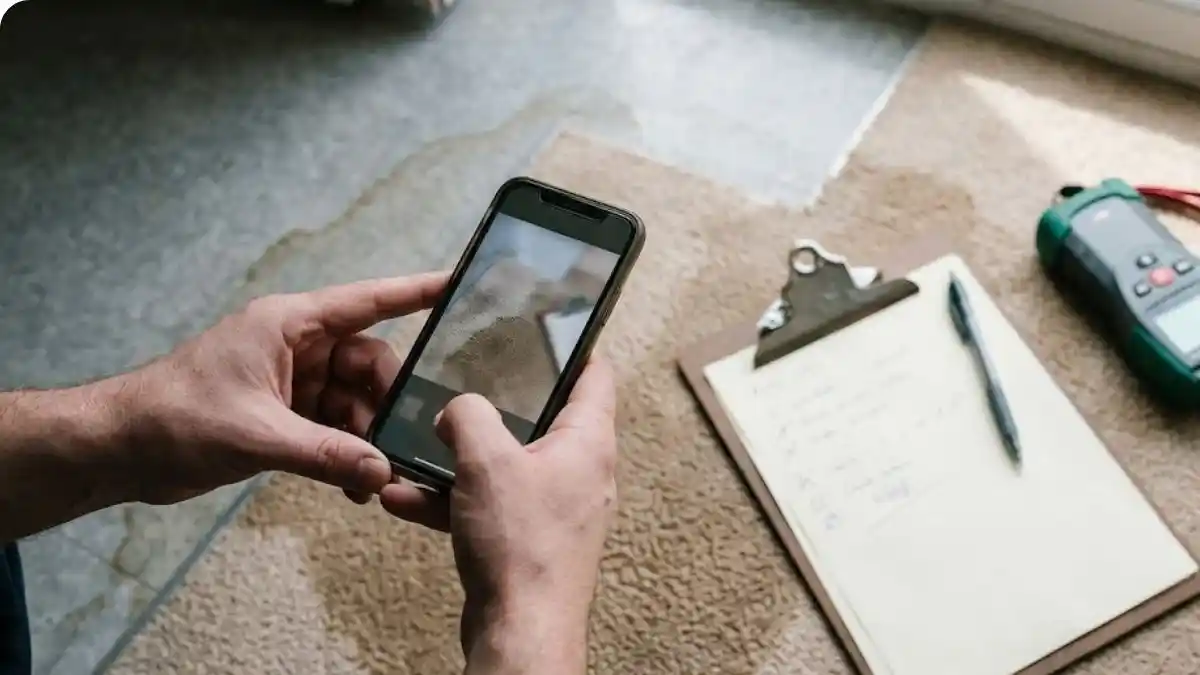
Your Mount Vernon home flooded. The water is extracted, the fans are running - and now your insurer wants documentation. What documentation, specifically? In what order? Before or after cleanup?
The answer to that last question matters more than most Fairfax County homeowners realize when they first file a water damage claim.
Document Before Cleanup Begins
This is the most important principle in water damage insurance documentation: your claim is based on what existed at the time of the loss, not on what you describe after the fact. This means photos and video must happen before extraction, before moving furniture, and before removing any materials.
What to document before anything else:
- The failure point - where the water came from (the burst pipe, the failed supply line, the overflowing drain)
- The extent of standing water - video walking each room, showing water depth against walls or furniture
- The materials affected - carpet, hardwood, drywall, furniture, electronics
- Pre-existing conditions that are clearly separate from the event (a previous water stain, unrelated damage)
The Documentation Sequence
| Phase | What to Document | Format |
|---|---|---|
| Discovery | Water extent, failure point, approximate time | Video walkthrough + written note with timestamp |
| Source control | Shutoff location, what was closed | Photo + written description |
| Before extraction | Full room-by-room photo/video | Wide angle + close-up of each affected area |
| During extraction | Equipment placed, moisture readings at start | Contractor photos + moisture log |
| Before material removal | Moisture readings at flood cut line, all affected walls | Contractor photos with meter readings visible |
| After drying complete | Final moisture readings showing dry standard achieved | Contractor drying log |
What an Insurance Adjuster Looks For
Adjusters evaluating water damage insurance claims in Fairfax County follow a specific methodology. They need to establish: (1) the peril (what caused the water event) and whether it's covered under your policy; (2) the scope (what was damaged and how extensively); and (3) that the scope was directly caused by the covered peril and not pre-existing.
The most common reasons claims are reduced or disputed: missing documentation of the failure source; material removal before the adjuster documents the damage; inadequate moisture documentation to support the scope of material removal; and confusion between new event damage and pre-existing conditions.
Understanding Your Policy Coverage
Most standard homeowners policies cover sudden and accidental water damage from these sources (check your specific policy language):
- Burst supply lines
- Appliance failures (washing machine, dishwasher, water heater)
- Roof damage from covered perils (wind, hail) causing water intrusion
- Ice dam water damage in some policies
And typically exclude:
- Flooding from external water sources (requires NFIP flood policy)
- Gradual leaks and maintenance issues
- Sewer backup without a specific endorsement
- Water damage from vacant properties in some policies (check vacancy clause)
USAA Claims in Mount Vernon
A significant share of Mount Vernon homeowners carry USAA policies, particularly in communities with military family connections. USAA's claims process is generally straightforward for covered sudden and accidental water events - they require prompt notification (call their 24-hour claims line the same day you discover the event), good documentation, and use of approved contractors or acceptance of their estimate. Our documentation is compatible with Xactimate, the standard estimating platform USAA and most major carriers use.
For water damage emergency response and documentation support in Mount Vernon and south Fairfax County, call (571) 708-6074 - any hour.