Sewage Backup Cleanup in Fairfax, VA
Category 3 sewage backup cleanup - night emergency response, full biohazard protocols, post-remediation clearance testing.
📞 Call (571) 708-6074 - 24/7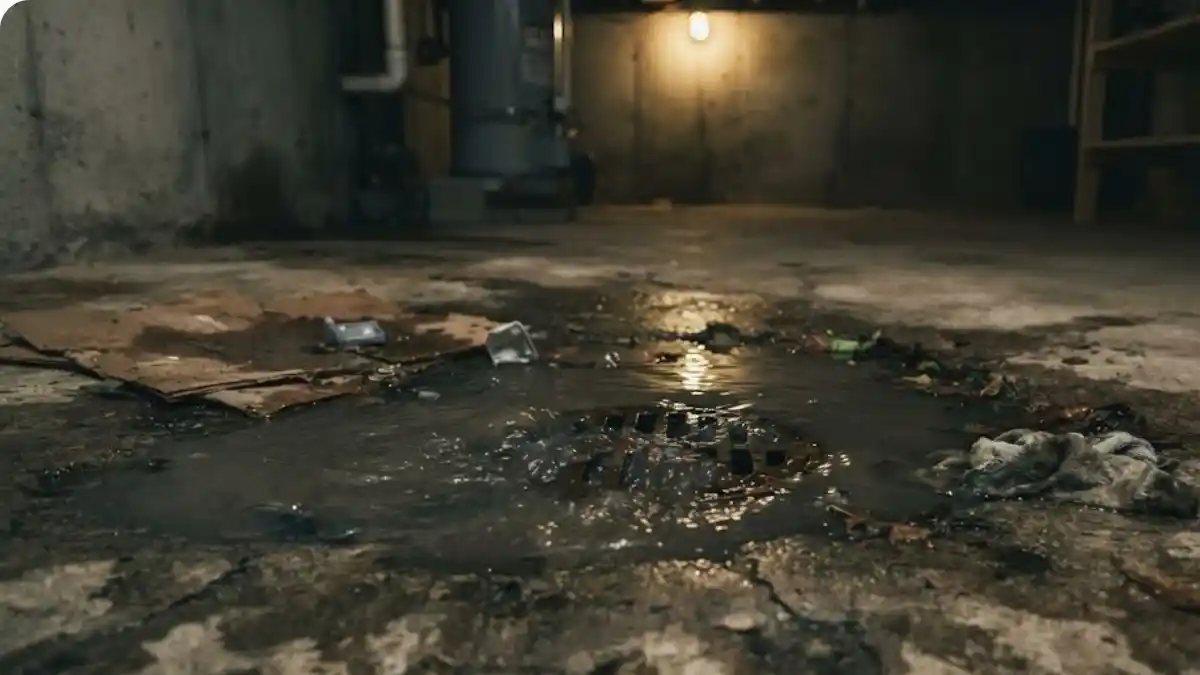
A sewage backup is one of the most serious water emergencies a Fairfax homeowner can face - not just because of the property damage, but because of the immediate and ongoing biological contamination risk. Under IICRC classification, sewage is Category 3 (black water): it contains E. coli, Salmonella, Hepatitis A, and other pathogens at levels that make DIY cleanup genuinely dangerous. Night and weekend events get worse faster than daytime events because household water use continues - every flush from upstairs adds to the backup volume below.
Call (571) 708-6074 immediately. Do not enter standing sewage-contaminated water without PPE. Do not flush any fixtures or run water in the home.
Need emergency help right now for sewage backup cleanup?
(571) 708-6074Any hour - live dispatcher answers
Why Sewage Backups Happen at Night
Main line backups - the type that cause sewage to surface through basement floor drains - are exacerbated by household water use. The main line from your home to the city sewer carries all of the wastewater from every fixture in the house. When that line is partially blocked by grease accumulation, tree root infiltration, or a collapsed pipe section, it handles low water usage adequately. When the family returns home from a long day and everyone showers, runs dishwashers, and does laundry simultaneously in the evening, the flow exceeds the restricted line's capacity - and wastewater finds the lowest open outlet in the system, which is almost always the basement floor drain.
The backlog that caused the backup was building for days or weeks. The event itself happens when usage peaks - typically evening or early night, which is why late-night sewage backup calls are disproportionately common.
The Decision: Call Now or Wait Until Morning
The case for immediate night response is not just about the smell. Every hour sewage water contacts your basement surfaces, it drives biological contamination deeper into porous materials. Drywall paper absorbs sewage through capillary action up to 12 inches above the waterline. Carpet pad becomes a Category 3 biohazard material that cannot be decontaminated - it's a removal item regardless. Unfinished concrete absorbs sewage more slowly but still requires professional antimicrobial treatment.
If sewage water has reached any porous material - carpet, drywall, wood framing, insulation - the contamination is present in that material until it's removed or professionally treated. Waiting until morning doubles or triples the square footage of contaminated material. Call (571) 708-6074 as soon as you discover the backup.
| Material | Cat 3 Contact | Standard Protocol |
|---|---|---|
| Concrete (sealed) | Can sometimes be decontaminated in place | Antimicrobial wash, encapsulant |
| Concrete (unsealed/porous) | Absorbed contamination | Antimicrobial treatment + monitoring |
| Drywall | Must be removed to contamination depth | Flood cut at minimum 12" above water line |
| Carpet pad | Non-salvageable | Always removed and disposed |
| Carpet (face) | Generally non-salvageable for Cat 3 | Remove unless demonstrably clean surface |
| Wood framing | Can be decontaminated if drying begins promptly | Antimicrobial treatment + drying + clearance test |
Sewage Backup Cleanup Process
Step 1: Shut down household water use. No flushing, no laundry, no dishwasher. Every gallon added upstairs adds to the backup below.
Step 2: Do not enter without PPE. Category 3 water requires respirator, gloves, eye protection, and Tyvek suit minimum. Our technicians arrive equipped.
Step 3: Emergency extraction. Truck-mounted extraction of standing sewage water. Unlike clean water extraction, sewage removal requires containment and proper disposal - it cannot be discharged to the storm drain.
Step 4: Category-appropriate material removal. All porous materials that have contacted Cat 3 water are removed to at least 12 inches above the highest contamination point. This is not a cost-increase decision - it's the required protocol for any remediation that will pass clearance testing.
Step 5: Antimicrobial application. EPA-registered antimicrobials applied to all remaining surfaces. Multiple applications may be required depending on contact time and material porosity.
Step 6: Structural drying. After contaminated materials are removed and antimicrobial treatment applied, remaining structural materials are dried to standard using industrial equipment.
Step 7: Post-remediation verification. Air sampling and surface testing confirm contamination has been reduced to background levels before rebuild begins.
Need emergency help right now for sewage backup emergency?
(571) 708-6074Any hour - live dispatcher answers
Sewage Backups in Older Lorton, Groveton, and Rose Hill Homes
South Fairfax County communities with older housing stock - including parts of Lorton, Groveton, Rose Hill, and the Route 1 corridor - have sewer systems with aging cast-iron main lines that are especially prone to root infiltration and interior rust scaling that reduces effective pipe diameter over decades. Homes in these areas that have never had a main line cleanout are at elevated risk. A single professional drain snake cleaning combined with a camera inspection is the most cost-effective sewage backup prevention available.
Related Guides & Tools
Frequently Asked Questions - Sewage Backup Cleanup
Need Sewage Backup Cleanup Now?
Live dispatchers available - crews serving south Fairfax County around the clock.
(571) 708-6074