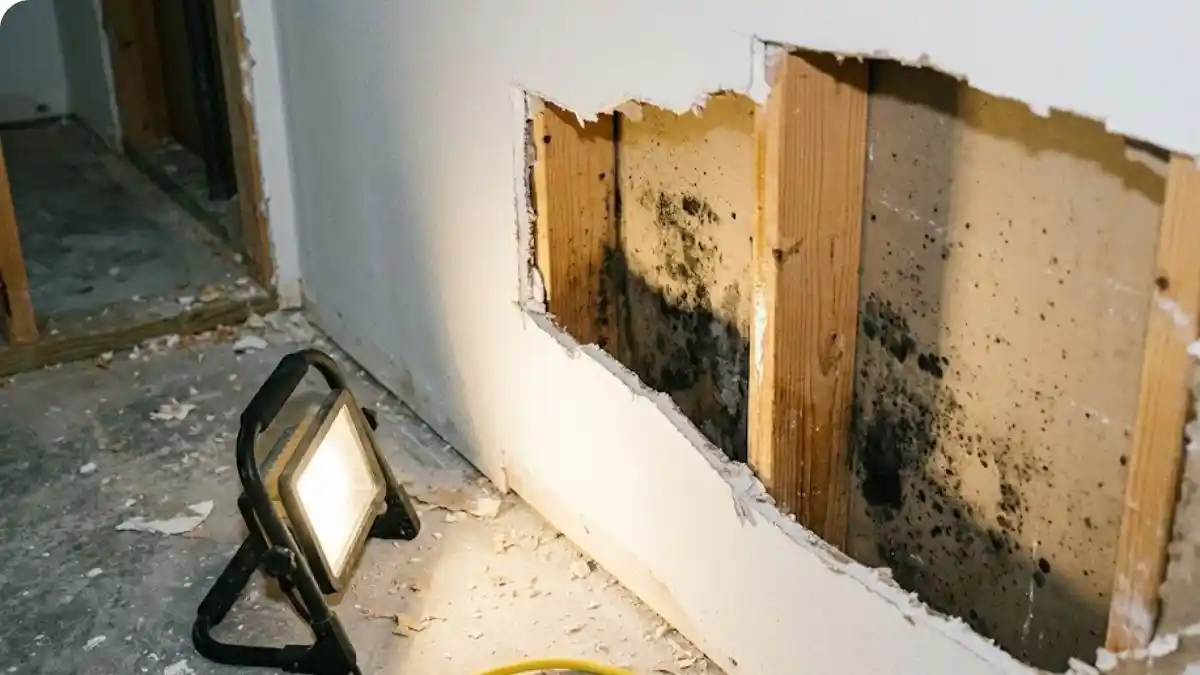
The fans have been running for three days. The floor feels dry. The drywall is no longer cold to the touch. You think the water damage is behind you.
In Burke Centre townhomes, it often isn't. Here is what's actually happening in the places you can't see - and the signs that mold is developing after water damage, even when surfaces appear dry.
Why Burke Centre Townhomes Have Elevated Hidden Mold Risk
Townhome construction creates specific moisture trapping conditions. Shared walls create thermal mass effects that slow drying in wall cavities. Limited exterior wall exposure means less natural drying. HVAC systems in many townhomes pull air from common areas, which can distribute humidity and spores through the building before mold is detected.
The water events most common in Burke Centre - ceiling leaks from the unit above, washing machine failures, dishwasher overflows - often introduce water in locations that are difficult to monitor: inside wall cavities, beneath flooring, within the floor/ceiling assembly shared with the unit below.
When Mold Starts Growing After Water Damage
| Time Post-Water Event | Mold Status | Material Moisture State |
|---|---|---|
| 0-24 hours | Spores present but not colonized | Surfaces wet, materials absorbing |
| 24-48 hours | Colonization beginning on wet porous surfaces | Surface may appear drying while cavity stays wet |
| 48-72 hours | Early colony formation in hidden areas | Hidden areas (cavities, under flooring) still wet |
| 72+ hours to 2 weeks | Active growth, potentially visible | Surfaces may feel dry while cavities host active mold |
| 2+ weeks | Established colony, MVOC production | Musty odor, possible surface breakthrough |
Signs Mold Is Growing After Water Damage - Even When You Can't See It
Musty or earthy smell that returns after airing out. Microbial volatile organic compounds (MVOCs) produced by mold have a distinctive odor. If the smell returns after 24-48 hours, mold is almost certainly present in a hidden location.
Soft or spongy drywall feel near the original water event area. Wet drywall that has become mold-colonized doesn't always look different from the outside - the paper face maintains structure while the interior gypsum softens.
New allergy-like symptoms in occupants. Runny nose, eye irritation, or respiratory symptoms that develop or worsen at home but improve when away can indicate indoor mold exposure.
Visible discoloration on walls or ceilings weeks after the event. Pink, gray, or green staining that appears after surfaces have dried is mold growing through from behind the drywall paper.
What Mold Remediation Involves When It's Hidden
Hidden mold remediation requires opening the suspected area - cutting drywall to expose the cavity - and assessing the contamination extent before any remediation begins. This is not the same as removing all drywall in the area: a trained technician with a moisture meter can often identify the exact extent of the mold before opening, limiting demolition scope.
After opening, HEPA vacuuming, antimicrobial treatment, and structural drying of the cavity frame the remediation. Drywall replacement is the final step - after clearance testing confirms contamination has been reduced to background.
For any water damage event in Burke Centre that was not professionally dried, or where musty odor has developed after water damage, call (571) 708-6074 for a mold inspection and assessment.