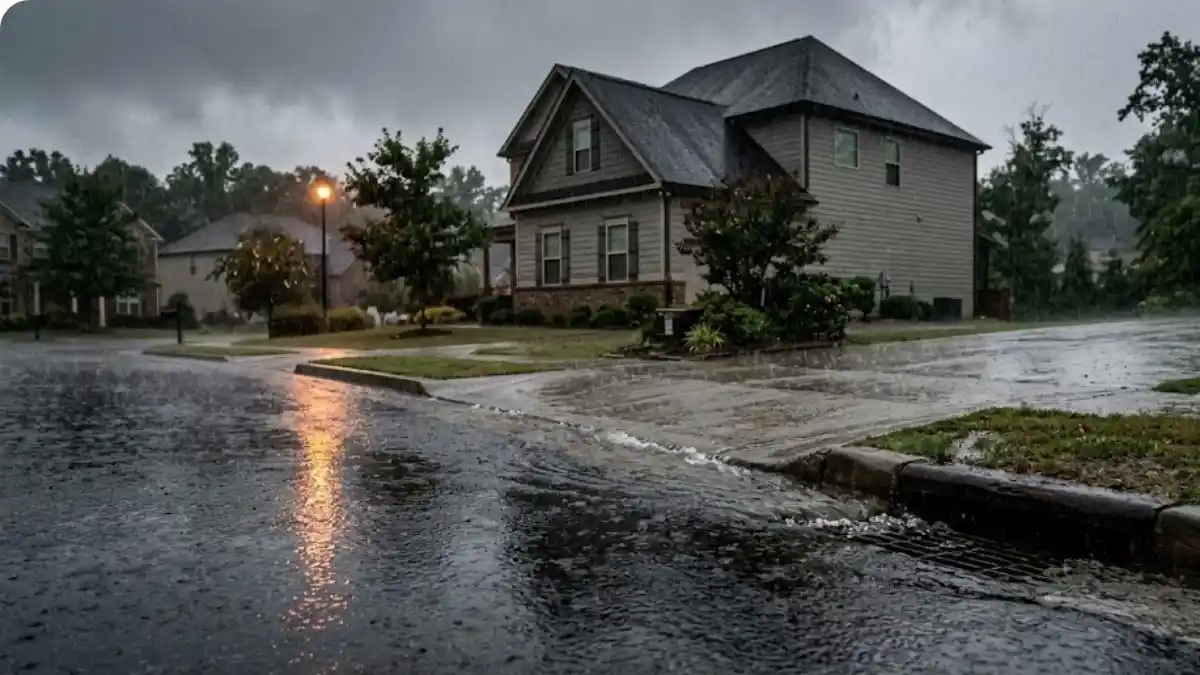
Fairfax County homeowners near Hybla Valley and Groveton know the pattern: a summer afternoon storm rolls through, drops two inches in 40 minutes, and the basement starts taking water before the rain has even stopped. When it's storm intrusion rather than a supply line failure, the water category and cleanup protocols are fundamentally different from a standard burst pipe event.
The speed is not bad luck. It's hydrology. Here is what's actually happening under your property when it rains in Hybla Valley and Groveton - and what to do when it happens.
The Fairfax County Clay Soil Problem
Fairfax County sits in the Piedmont geological zone, characterized by soils with high clay content. Clay absorbs water slowly - much more slowly than sandy or loamy soil - and when dry clay receives water rapidly, the top layer seals before much water can percolate. The result is essentially a waterproofed surface that directs rainfall as runoff rather than absorbing it.
In Hybla Valley and Groveton, the rolling terrain focuses this runoff toward lower-lying areas. Properties at the base of gentle slopes, near culverts, or at low points in neighborhood drainage systems see surface water arrive at their foundations within minutes of a storm event beginning.
The Storm Drain Capacity Problem
Fairfax County's storm drain infrastructure was designed for rainfall intensities from several decades ago. The region's summer convective storms - particularly the afternoon pop-up events that can dump 2+ inches in under an hour - routinely exceed storm drain design capacity. When systems surcharge, water backs up into neighborhood streets and yards faster than it can drain.
| Storm Type | Typical Rate | Drain System Capacity | Runoff Character |
|---|---|---|---|
| Light rain | Under 0.5"/hr | Adequate in most areas | Gradual absorption, minimal runoff |
| Moderate storm | 0.5-1"/hr | Stressed in low areas | Some surface runoff to low points |
| Fairfax convective summer storm | 1-3"/hr, 30-60 min | Overwhelmed - system surcharges | Rapid surface runoff, street flooding |
What Category of Water Is in Your Basement After a Storm?
This is the most important question to answer before you decide how to respond. Storm water that has traveled across soil, through streets, or through a municipal storm system is Category 2 at minimum and often Category 3 if it has contacted sanitary sewer infrastructure. Do not assume surface flooding is clean water - it isn't, and treating it as clean water during cleanup creates health risk and insurance complications.
If you see brown or discolored water, smell sewage, or notice the water entered through floor drains rather than just through the foundation, treat it as Category 3 until proven otherwise. Sewage backup cleanup protocols apply.
Preventing the Next Hybla Valley or Groveton Basement Flood
- Install a battery-backup sump pump before storm season - power outage during the storm that floods you is extremely common
- Add clear polycarbonate window well covers to prevent overflow
- Grade soil away from the foundation if you have any ability to do so - even a few inches of outward slope makes a significant difference
- Clean gutters and downspouts in spring - clogged downspouts direct roof runoff toward the foundation
- Know your sump pit's capacity versus your sump pump's GPM rating - undersized pumps can't keep up with major events regardless of condition
For Hybla Valley and Groveton storm flood cleanup and flooded basement remediation after any storm event - including commercial properties - call (571) 708-6074 - any hour, live dispatcher, 60-minute dispatch target.