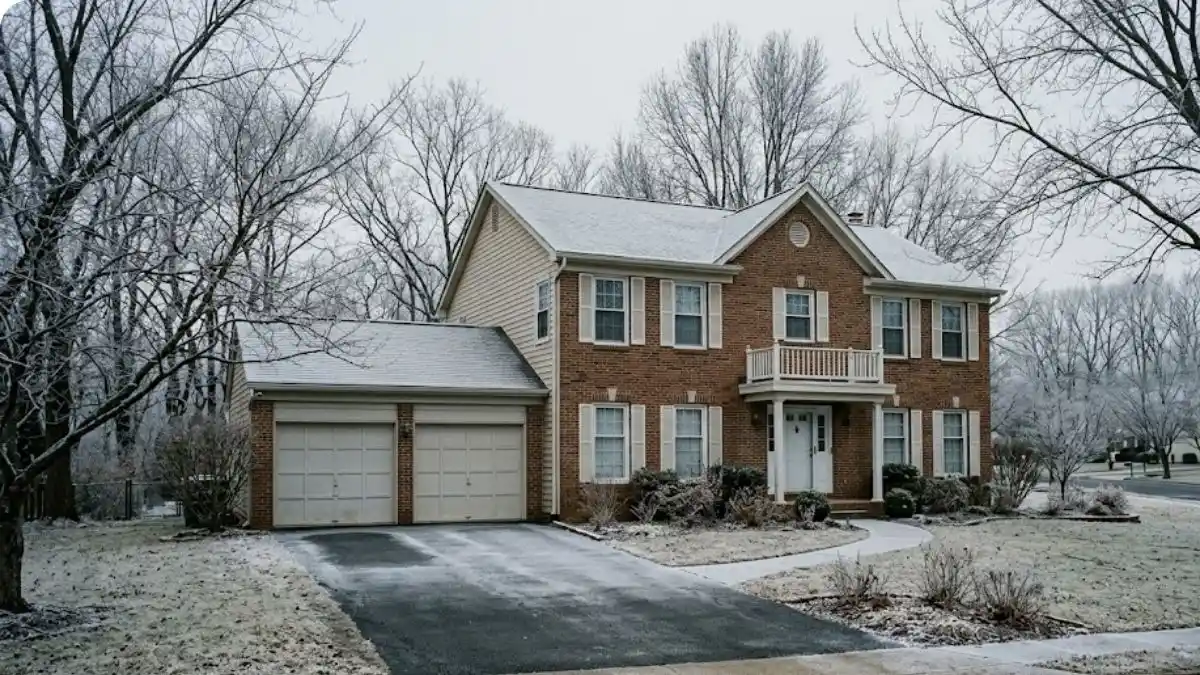
Every winter in south Fairfax County, the same scenario plays out in homes near Fort Belvoir: a service member deploys in November, sets the thermostat to 60°F to save on heating bills, and returns in February or March to find a burst pipe has been running since January.
This is a preventable catastrophe. Here is the information you need before the next deployment.
Why Fairfax County Winters Create Freeze Risk
The conventional wisdom about pipe freezing is that it requires sustained temperatures below 20°F. That's broadly correct for insulated interior pipes - but south Fairfax County's homes include a significant number of structures with supply lines running through exterior walls, unheated garage spaces, or crawlspaces that see temperatures well below freezing when outdoor temperatures drop into single digits. The Fairfax County climate produces 3-8 freeze events of sufficient duration per winter season.
| Temperature | Duration | Freeze Risk (Uninsulated Exterior Pipes) |
|---|---|---|
| 28-32°F | Any | Low - surface temperatures rarely drop to pipe level |
| 20-28°F | Under 6 hours | Low - most interior pipes protected |
| 20-28°F | 6+ hours | Moderate - exterior wall and crawlspace pipes at risk |
| Below 20°F | Any | High - all uninsulated exterior-adjacent pipes at risk |
| Below 10°F | Any | Very high - even some interior pipes at risk in older homes |
Preparing Your South Fairfax Home Before Deployment
Set the thermostat to 55°F minimum - not lower. 55°F is the minimum indoor temperature that protects interior pipes in most Fairfax County construction. Energy savings below 55°F are not worth the risk. If you're going to be away for more than two weeks during Fairfax winters, 58-60°F is a safer margin.
Know where your main shutoff is - and mark it. Write the shutoff location on a note inside the utility room door. If a trusted person is checking the home, make sure they know where it is and how to operate it.
Open cabinet doors under all sinks on exterior walls. This allows warm air circulation to reach supply lines that run near exterior walls.
Arrange regular property checks. Someone who can confirm the heat is running and there's no water event should visit the property every 48-72 hours during extended absences in winter months. For longer deployments, consider a property management arrangement.
Consider a smart thermostat with temperature alerts. These devices send push notifications to your phone when indoor temperature drops below a set threshold. A $150-200 smart thermostat may be the most cost-effective deployment preparation available.
If the Burst Happens While You're Away
The trusted person checking your home discovers water. Here is what they should do:
- Shut off the main water supply immediately - the location you've marked for them
- Cut power to affected areas at the breaker panel if safe to do so
- Call (571) 708-6074 - they do not need to be present for the crew; they can let the crew in
- Document with their phone and send photos to you
- Contact your insurer to open a claim
Our team handles the full scope of burst pipe cleanup and can coordinate with a Power of Attorney or authorized family member if you're actively deployed. We provide documentation that supports claims filed by authorized representatives.
For immediate response to any freeze or burst pipe emergency in the Fort Belvoir area and surrounding south Fairfax communities, call (571) 708-6074 any hour.